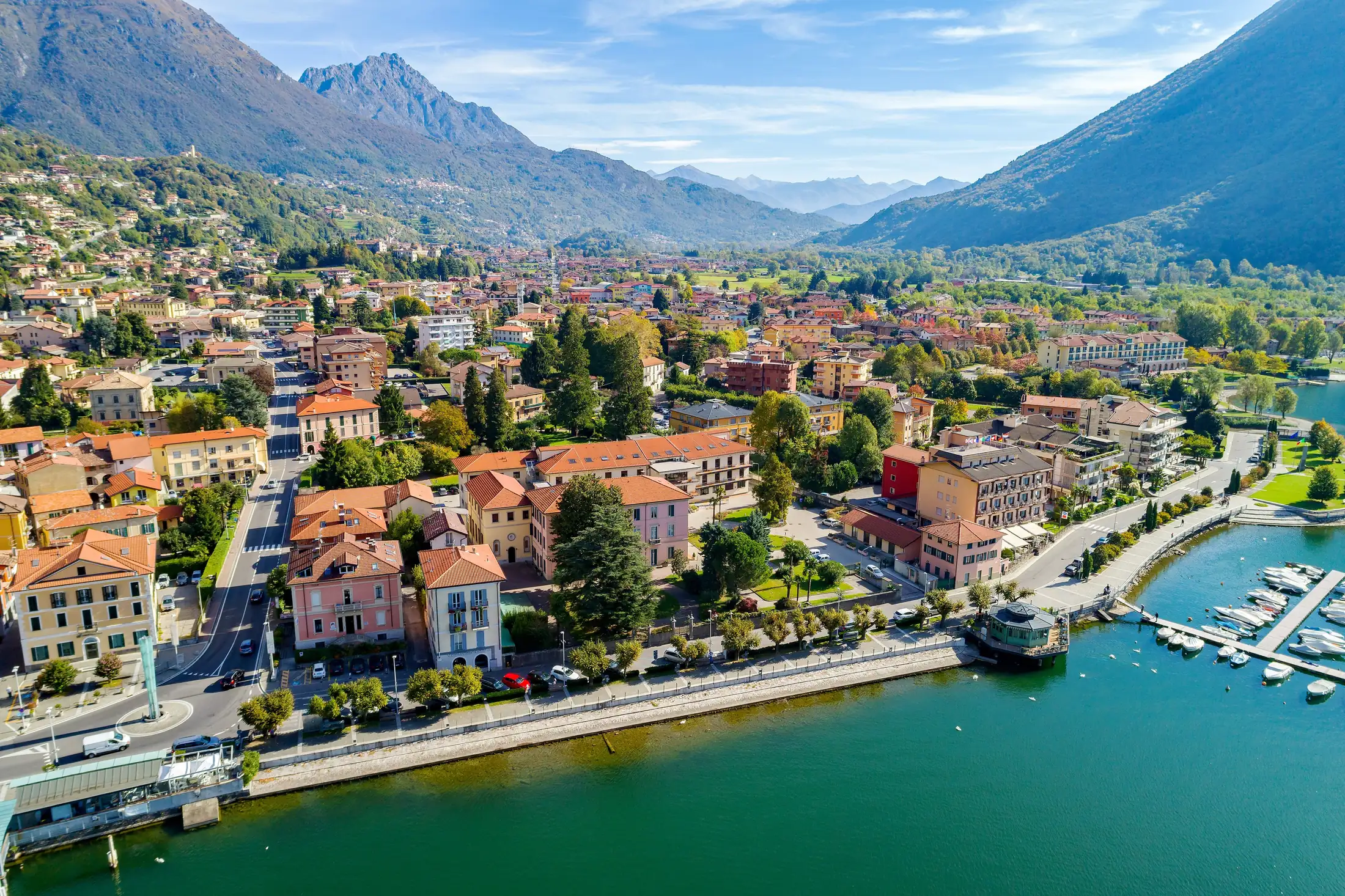
Lugano
Lugano is the financial centre of Italian-speaking Switzerland and, by most measures, the third largest in the country after Zurich and Geneva. Its banks grew up serving clients from northern Italy, with Milan an hour away, and the city has since added commodity trading and, through the Plan ₿ programme it launched in 2022, a deliberate effort to attract blockchain and digital-asset businesses.
The gateway to Italy
For a company from Asia, the Middle East or Africa, Lugano is the Swiss location closest to Italy and to the markets of southern Europe. Its strengths are private banking and asset management, a community of commodity traders, and a university that trains staff in Italian, English and German.
Language and business community
Company, banking and anti-money laundering law are federal and apply in Lugano exactly as in Zurich, Geneva or Zug. What sets Ticino apart is its language, because the authorities, the commercial register and the courts work in Italian, and its business community, which has been shaped by private banking for Italian clients, by commodity trading and, since the city launched Plan ₿ in 2022, by companies working with blockchain and digital assets. The Gotthard Base Tunnel has brought Zurich within reach by train, so a company in Lugano can serve both the Italian and the German-speaking markets.
Trade with Italy
For businesses that trade with or through Italy, such as fashion and luxury goods, food, industrial supplies or commodities, Lugano offers Swiss legal certainty next door to one of Europe's largest economies. Many employees commute daily from Italy, and the agreement between Switzerland and Italy on the taxation of cross-border workers, which applies to new cross-border workers from 2024, governs how their salaries are taxed. The articles below cover the federal law that applies in Lugano as in the other financial centres: company formation, bank accounts, tax, anti-money laundering, sanctions and dispute resolution. Where Ticino has its own rules, in particular the cantonal tax burden, proceedings in Italian and the employment of cross-border commuters from Italy, a company settling in Lugano should plan for them from the start.
Across the Swiss financial centres
Corporate · Liquidation
Liquidating a Swiss company limited by shares (AG): routes, procedure and restrictions
Corporate · Restructuring
Capital loss and over-indebtedness under Swiss company law: the board's statutory duties
Social Security · Practice
Leaving Switzerland: AHV pensions abroad, refunds of contributions and voluntary insurance
Social Security · Practice
Social security agreements and secondments: the AHV in cross-border situations
Social Security · Practice
The AHV old-age pension in 2026: amounts, the 13th pension, early and deferred retirement
Social Security · Practice
Unpaid AHV contributions: the personal liability of directors and managers
Social Security · Practice
AHV for the self-employed and for persons without gainful activity
Social Security · Practice
AHV contributions on salaries in 2026: what employers and employees pay
Social Security · Practice
The Swiss AHV: how the first pillar works for foreign entrepreneurs and their families
Property · Commercial Property
Buying business premises and commercial property in Switzerland
Property · Purchase Process
The Swiss property purchase process: reservation, notarial deed and land register
Property · Tax
Taxes on Swiss real estate: transfer tax, property gains tax and imputed rental value
Property · Financing
Mortgage financing in Switzerland for foreign buyers
Property · Commercial Leases
Renting office and commercial premises in Switzerland
Property · Holiday Homes
Holiday homes and second homes in Switzerland
Property · Corporate Ownership
Holding Swiss real estate through a company
Property · Indirect Investment
Investing in Swiss real estate through funds and listed companies
Residence · Settlement Permit
The settlement permit (C permit): permanent residence in Switzerland
Residence · Citizenship
Swiss citizenship: ordinary naturalisation and dual nationality
Residence · Family Reunification
Family reunification: bringing your spouse and children to Switzerland
Residence · Departure
Leaving Switzerland: deregistration, taxes, pensions and permits
Private Client Tax · Wealth Tax
Wealth tax in Switzerland: how cantons tax net assets
Private Client Tax · Inheritance and Gift Tax
Inheritance and gift tax in Switzerland
Private Client Tax · Capital Gains